Suraj Fab Tech provide Latest Innovations in Tyre Pyrolysis Plant Technology across
India.
Our Manufacturing unit is based in Ahmedabad, Gujarat, India.
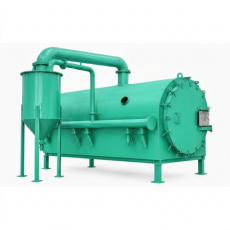
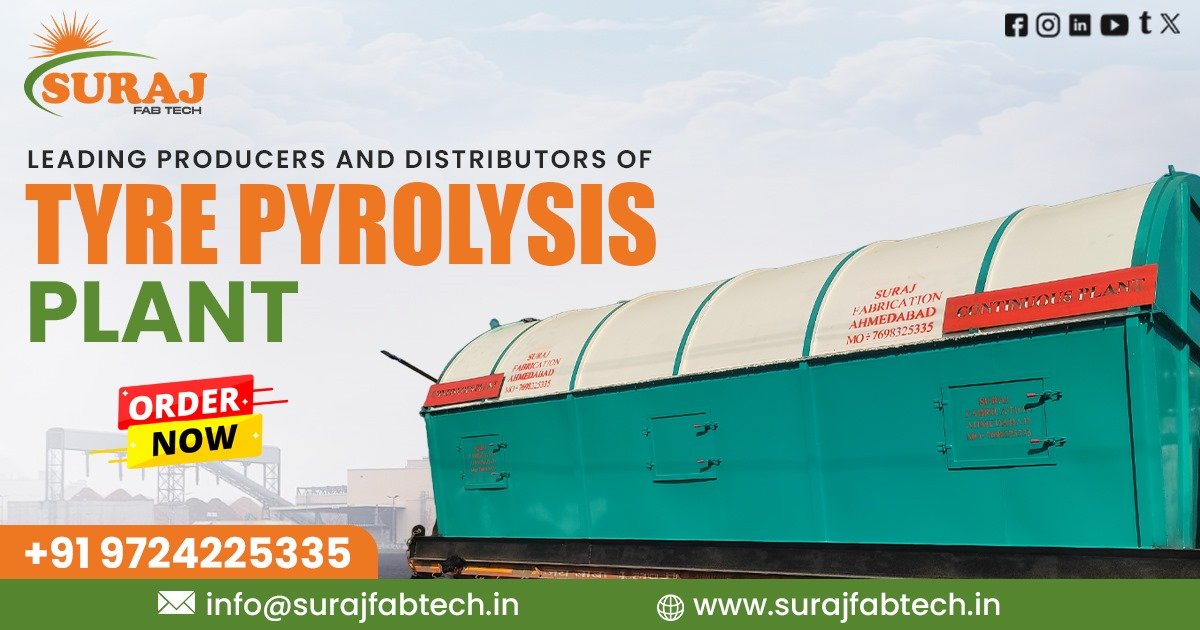
A tyre pyrolysis plant is a specialized facility that employs the process of pyrolysis to recycle waste tyres.
Pyrolysis is a thermal decomposition method where organic materials are heated in an oxygen-free environment, causing the tyres to break down chemically without combustion.
This process transforms tyres into pyrolysis oil, carbon black, steel wire, and combustible gas — all of which have commercial value.
Components of a Tyre Pyrolysis Plant
- Reactor: The core chamber where tyres are heated and decomposed.
- Condenser and Oil Recovery System: Cools pyrolysis gases into liquid oil.
- Gas Recovery System: Captures and utilizes combustible gases produced.
- Feeding and Discharging System: Mechanisms for loading waste tyres and unloading residual materials.
- Control System: Automated controls to regulate temperature, pressure, and ensure safety.
How Does a Tyre Pyrolysis Plant Work?
Step-by-Step Process Flow
- Feeding: Shredded or whole waste tyres are fed into the sealed reactor.
- Heating: The reactor is heated to around 300-500°C in the absence of oxygen, preventing combustion.
- Pyrolysis Reaction: Heat breaks down tyres into smaller molecules, generating pyrolysis gas, oil vapor, carbon black, and steel wire.
- Condensation: Pyrolysis gases are passed through condensers to cool and convert into liquid pyrolysis oil.
- Recovery: Carbon black and steel wire remain as solid residues, collected separately.
- Gas Utilization: Non-condensable gases are often recycled to fuel the reactor, increasing energy efficiency.
Types of Tyre Pyrolysis Plants
- Batch Plants: Process tyres in discrete batches, ideal for small-scale operations.
- Continuous Plants: Run non-stop, processing large volumes, suited for industrial-scale production.
- Small-scale vs Industrial-scale: Small-scale plants have lower capital investment but limited output, while industrial plants require higher investment but offer better economies of scale.
Benefits of Using a Tyre Pyrolysis Plant
- Waste Reduction: Diverts tonnes of tyres from landfills, reducing environmental hazards.
- Pollution Control: Eliminates harmful open burning of tyres, which releases toxic smoke.
- Sustainability: Supports circular economy by converting waste into reusable products.
Economic Benefits
- Valuable By-products: Pyrolysis oil can be used as industrial fuel; carbon black is valuable in manufacturing; steel wire can be recycled.
- Energy Efficiency: Recycled gases can fuel the plant, lowering operational costs.
- Profitability: With proper management, tyre pyrolysis plants offer a solid return on investment.
Social and Regulatory Impact
- Regulatory Compliance: Meets increasing environmental regulations on tyre disposal.
- Employment: Creates jobs in plant operation, maintenance, and supply chain.
- Public Health: Reduces environmental pollutants, improving community health.
Products from Tyre Pyrolysis and Their Uses
Pyrolysis Oil
- Dark liquid fuel with energy content similar to diesel.
- Used as an alternative fuel in boilers, furnaces, and power plants.
- Potential raw material for chemical industries.
Carbon Black
- Fine black powder used as a reinforcing agent in rubber products.
- Applications in manufacturing tires, paints, inks, and plastics.
- Increasing demand due to environmental benefits of recycled carbon black.
Steel Wire
- Extracted steel is clean and can be recycled in steel production.
- Helps reduce the demand for virgin steel, conserving natural resources.
How to Choose the Right Tyre Pyrolysis Plant
Factors to Consider
- Capacity: Match plant size to waste tyre availability and budget.
- Technology: Look for advanced pyrolysis technology with high conversion efficiency.
- Compliance: Ensure the plant meets local environmental and safety standards.
Supplier and Manufacturer Evaluation
- Research companies with proven track records.
- Check for comprehensive after-sales service and technical support.
- Confirm warranty terms and training programs are provided.
Future Trends in Tyre Pyrolysis Technology
Advances in Reactor Design
- Improved heat transfer methods reduce energy consumption.
- Automation enables real-time monitoring and operational safety.
Integration with Other Waste Management Technologies
- Combining pyrolysis with gasification or recycling enhances waste processing capabilities.
- Moving towards zero-waste industrial ecosystems.
Government Policies and Incentives
- Increasing global environmental regulations promote pyrolysis adoption.
- Subsidies and environmental credits lower barriers for plant installation.
Suraj Fab Tech provide Latest Innovations in Tyre Pyrolysis Plant Technology across
India including locations in Andhra Pradesh, Arunachal Pradesh, Assam, Bihar, Chandigarh, Chhattisgarh, Dadra and Nagar Haveli and Daman and Diu, Delhi, Goa, Gujarat, Haryana, Himachal Pradesh, Jammu and Kashmir, Jharkhand, Karnataka, Kerala, Ladakh, Madhya Pradesh, Maharashtra, Manipur, Meghalaya, Nagaland, Odisha, Puducherry, Punjab, Rajasthan, Sikkim, Tamil Nadu, Telangana, Tripura, Uttar Pradesh, Uttarakhand, West Bengal.
For detailed information or inquiries, please get in touch with us.
📧 Email: info@surajfabtech.in
📞 Phone: +91 9724225335
🌐 Website: www.surajfabtech.in
📍 Manufacturing Unit: Ahmedabad, Gujarat – Serving All Over India
View Product: Click here